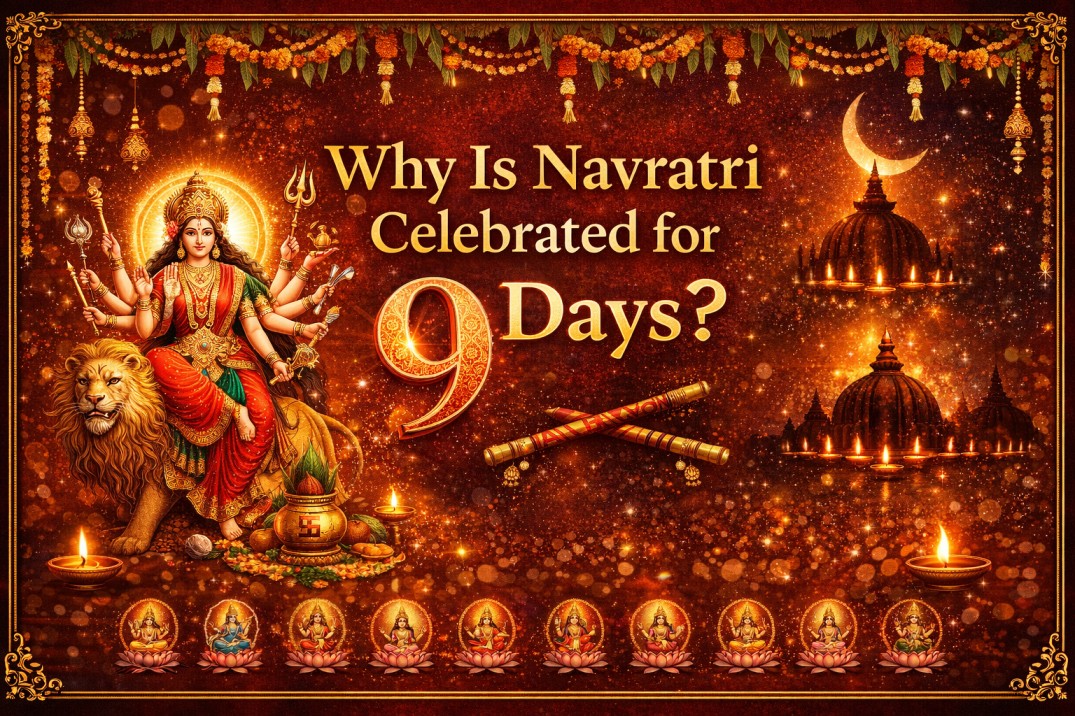
Navratri is one of the most sacred and spiritually powerful festivals in Hinduism. Celebrated over nine days and nights, Navratri is not just about rituals, fasting, or celebrations—it is a deep journey of transformation, devotion, and victory of good over evil.
But why exactly is Navratri celebrated for 9 days?
The answer lies in mythology, spirituality, astrology, and the deeper meaning of the number 9 itself.
Let’s understand this in detail
The most important reason Navratri lasts 9 days is that each day is dedicated to a different form of Goddess Durga, collectively known as Navdurga.
Each form represents a unique energy and life lesson:
Shailputri – Strength and stability
Brahmacharini – Devotion and discipline
Chandraghanta – Courage and fearlessness
Kushmanda – Creation and positivity
Skandamata – Love and nurturing
Katyayani – Power and determination
Kalaratri – Protection and destruction of negativity
Mahagauri – Purity and peace
Siddhidatri – Fulfillment and blessings
These nine forms symbolize the complete cycle of human growth, from beginning to fulfillment.
Each day of Navratri is an opportunity to connect with one specific divine energy and improve that aspect in your own life.
According to Hindu mythology, the origin of Navratri is linked to the battle between Goddess Durga and the demon king Mahishasura.
Mahishasura had a powerful boon that made him almost invincible
He created chaos in heaven and on earth
The gods combined their energies to create Goddess Durga
A fierce battle took place that lasted 9 days and 9 nights. On the 10th day, Goddess Durga defeated Mahishasura, which is celebrated as Vijayadashami (Dussehra).
This is why Navratri is celebrated for 9 days—each day represents a phase of this divine battle.
Mahishasura represents ego, negativity, and ignorance
Goddess Durga represents power, wisdom, and truth
The 9 days symbolize the inner battle within us.
Navratri is not just an external celebration—it is a personal spiritual journey.
Each of the 9 days represents a step toward:
Self-discipline
Emotional healing
Mental clarity
Spiritual awakening
Days 1–3: Removing negativity (Tamasic energy)
Days 4–6: Building strength and positivity (Rajasic energy)
Days 7–9: Achieving peace and wisdom (Sattvic energy)
This structure shows that Navratri is designed as a complete transformation process.
By the end of 9 days, a person is believed to be:
More balanced
More aware
Spiritually elevated
Navratri occurs during important seasonal and cosmic transitions:
Chaitra Navratri (March/April) → Spring transition
Sharad Navratri (September/October) → Autumn transition
During these periods:
The body undergoes natural changes
Energy levels shift
The mind becomes more receptive
This makes Navratri the perfect time for fasting, meditation, and spiritual practices.
From an astrology perspective:
Planetary energies are more active
Spiritual vibrations are stronger
Manifestation becomes easier
The 9 days act as a cosmic window for growth and renewal.
The number 9 (Nav) holds deep significance in Hindu culture and spirituality.
It represents completeness and perfection
It is the last single-digit number → symbol of completion
In numerology, 9 is associated with universal energy and wisdom
Examples:
Navgraha (9 planets)
Navdurga (9 forms of Durga)
Navratri (9 nights)
This shows that the number 9 represents the full cycle of existence.
Navratri is also linked to the body’s energy centers (chakras).
Each day helps activate and balance different chakras:
Root Chakra → Stability
Heart Chakra → Love
Third Eye Chakra → Awareness
By following rituals, fasting, and meditation during these 9 days, a person can:
Cleanse their energy
Improve focus
Achieve inner peace
Apart from spiritual reasons, there are practical aspects too:
Navratri fasting helps:
Detox the body
Improve digestion
Boost immunity
Encourages discipline
Reduces distractions
Promotes mindfulness
That’s why many people feel mentally refreshed and spiritually uplifted after Navratri.
Navratri is celebrated for 9 days because Goddess Durga fought the demon Mahishasura for 9 days, and each day represents a different form of the Goddess and a step in spiritual growth.
The 9 days symbolize a complete cycle of transformation—from removing negativity to achieving spiritual enlightenment.
The 10th day, known as Dussehra, marks the victory of good over evil.
Yes, Navratri aligns with seasonal changes, making it ideal for detox, fasting, and mental reset.
Navratri is not just a festival—it is a powerful 9-day blueprint for transformation.
Each day has a purpose:
To cleanse your mind
To strengthen your inner power
To bring you closer to your higher self
When you understand the real meaning behind these 9 days, Navratri becomes more than celebration—it becomes a life-changing experience.

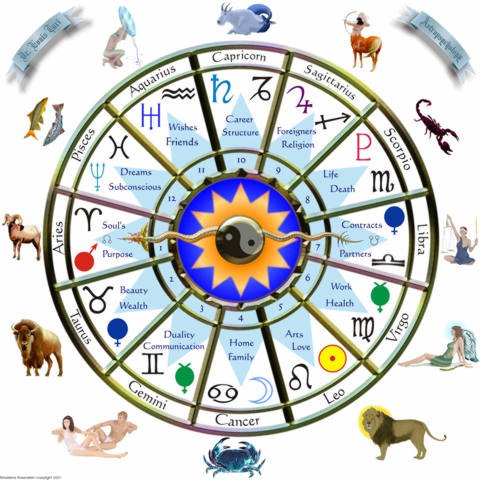
get live consultation on phone call and chat message find the prediction guidanc...
May 07, 2026 - Thursday

April 2026 brings powerful planetary shifts that influence emotions, decisions,...
Apr 13, 2026 - Monday

April 2026 brings powerful cosmic movements that can reshape emotions, relations...
Apr 11, 2026 - Saturday
he New Moon in Aries on April 20, 2026 marks one of the most powerful cosmic res...
Apr 10, 2026 - Friday
In astrology, Aries Season marks the beginning of the zodiac cycle and the start...
Apr 09, 2026 - Thursday

Aries (Mesh Rashi) is often described as bold, energetic, and fearless. Most peo...
Apr 08, 2026 - Wednesday

People born under the Aries zodiac sign (March 21 – April 19), known as Me...
Apr 07, 2026 - Tuesday

People born under the Aries zodiac sign (March 21 – April 19) are known fo...
Apr 04, 2026 - Saturday

Every year between March 21 and April 19, the universe enters on...
Apr 03, 2026 - Friday